Professional design is often seen as a cost problem.
For many teams, the assumption is simple. If you want high-quality work, you have to work with an agency. And if you work with an agency, it’s going to be expensive.
Large retainers. Long timelines. Costs that grow quickly.
So design gets pushed down the priority list, or handled in a way that feels more manageable. A template gets stretched. An intern takes a pass at it. The presentation goes out looking close enough.
And the cost of that decision rarely shows up on an invoice.
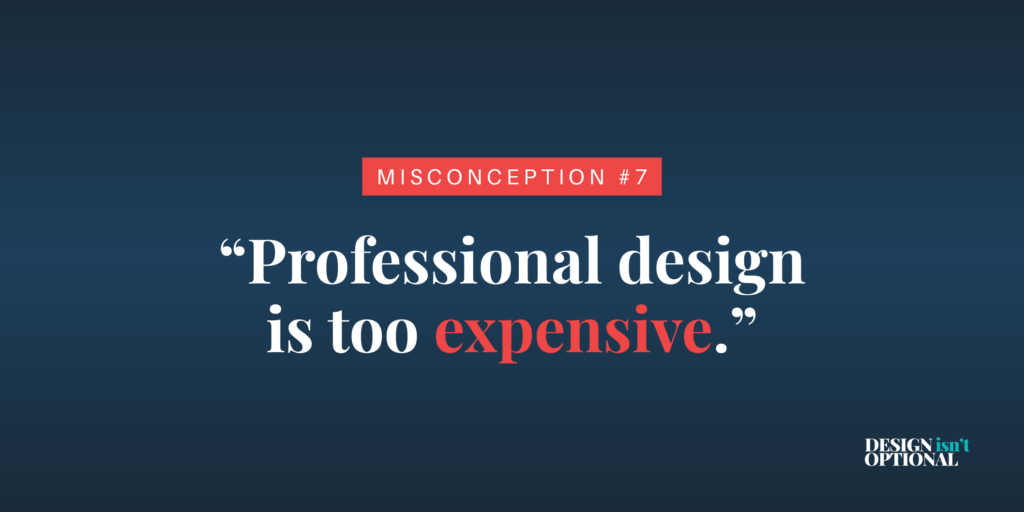
Misconception #7
“Professional design is too expensive.”
Why This Belief Happens
Most people have only experienced design in two ways. A full agency, with layers of process and overhead. Or a single freelancer, working independently.
Agencies often come with built-in complexity. Larger teams, multiple points of contact, and account management layers that extend timelines. That structure drives cost, whether a business needs it or not.
On the other side, freelancers can feel more accessible. Rates are lower and the process feels simpler. But a single freelancer has capacity limits, no backup when timelines compress, and often lacks the range to handle a full project from strategy through execution. A brand that needs a pitch deck, a one-pager, and a set of social ads in the same week is already testing the limits of what one person can carry.
So teams are left choosing between two extremes, neither of which feels quite right. The assumption becomes: quality costs more than we can justify.

The Reality
The real issue isn’t that design is expensive. It’s that inefficient communication is expensive, and most teams are already paying for it without realizing it.
Consider a few common scenarios.
A sales team walks into a meeting with a deck that looks inconsistent and hard to follow. The prospect asks questions that a clearer presentation would have already answered. The deal takes two more follow-up calls to close, or doesn’t close at all.
A marketing team needs to produce a product launch package. Because there are no brand guidelines or design systems in place, every asset gets built from scratch. The project takes three weeks instead of one, and still doesn’t look cohesive when it ships.
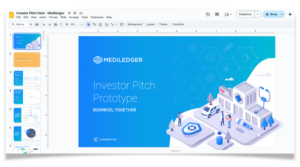
A founder sends a pitch deck to investors. The content is strong. The design signals a company that hasn’t invested in its own presentation. The meeting gets passed to a junior associate.
In each case, the cost of weak design isn’t a line item. It shows up in lost time, slower decisions, missed opportunities, and a brand that consistently undersells the quality of the actual product or service behind it.
Strong design, when structured well, reduces friction. It helps teams communicate faster, present more clearly, and move with more confidence, at every stage of the business.
What Strong Design Environments Do Differently
Teams that get the most value from design focus less on cost alone and more on how the work is structured.
They prioritize clarity
Design is used to make information easier to understand, so less time is spent explaining or clarifying. A well-structured one-pager replaces a 20-minute explanation. A clear infographic answers the question before it gets asked. A presentation with a logical narrative arc gets to the decision faster.
They make guidelines practical
Good materials, internal documents. Not just rules, but application.
They maintain consistency
A clear system keeps materials aligned so teams aren’t constantly adjusting or reworking. When brand guidelines, templates, and a defined visual language are in place, a new hire can produce on-brand materials without starting from scratch. A vendor can execute without a lengthy briefing process. Every touchpoint builds on the last instead of contradicting it.
They remove unnecessary overhead
The structure supports the work without adding layers that slow things down or inflate cost. When a creative partner understands the brand, the brief, and the audience, briefing time compresses. Revision rounds shrink. Deliverables arrive ready to use rather than requiring a second pass before they go out.
They move faster
With clear direction and systems in place, projects don’t stall. A team working from an established design system can turn a new campaign asset in hours, not days. Templates built correctly the first time eliminate the rebuild cycle that quietly consumes weeks of capacity every quarter.
They treat design as part of the business, not a separate expense
Design supports sales, communication, and growth rather than sitting on the sidelines as a visual add-on. The companies that understand this don’t ask whether they can afford good design. They ask what it’s costing them not to have it.
The Bigger Lesson
Design can feel expensive when it’s viewed in isolation, as a one-time project cost or a line item that competes with other priorities.
But when you look at what it actually affects, how quickly your team communicates, how clearly your value comes across, how consistently your brand shows up at every touchpoint, the conversation changes.
Unclear communication is expensive. Inconsistent materials are expensive. Slower decisions are expensive. Rebuilding assets from scratch every time is expensive. Losing a deal because the deck didn’t hold up in the room is expensive.
Strong design, structured well, reduces all of that.
This is why design isn’t optional. It’s part of how businesses operate, not just how they look.
Many teams assume that working with a creative partner means choosing between high-cost agency models or more limited freelance support.
In practice, what they’re usually looking for is something in between. Clear direction, consistent execution, and a structure that supports the work without adding unnecessary complexity or overhead.
When that balance is in place, the question shifts. Design stops feeling like a cost. It starts feeling like the thing that makes everything else easier, faster sales conversations, cleaner communications, stronger first impressions, and materials that work as hard as the people behind them.